You're scrolling through your phone at night, watching missile strikes light up the sky over Tehran. It feels distant. It feels like someone else's problem. But here's the uncomfortable truth: that war is already inside your renovation budget.
A Conflict That Starts in the Middle East — and Ends in Your Kitchen
On February 28, 2026, the United States and Israel launched "Operation Epic Fury" against Iran — the largest American military operation since the 2003 invasion of Iraq. Within days, Iran's Supreme Leader Ayatollah Ali Khamenei and several senior military officials were killed in the opening strikes. Iran retaliated with drone and missile attacks across Qatar, the UAE, Kuwait, and Bahrain. Hezbollah launched rockets into Israel. Israel responded with a ground invasion of Lebanon.1
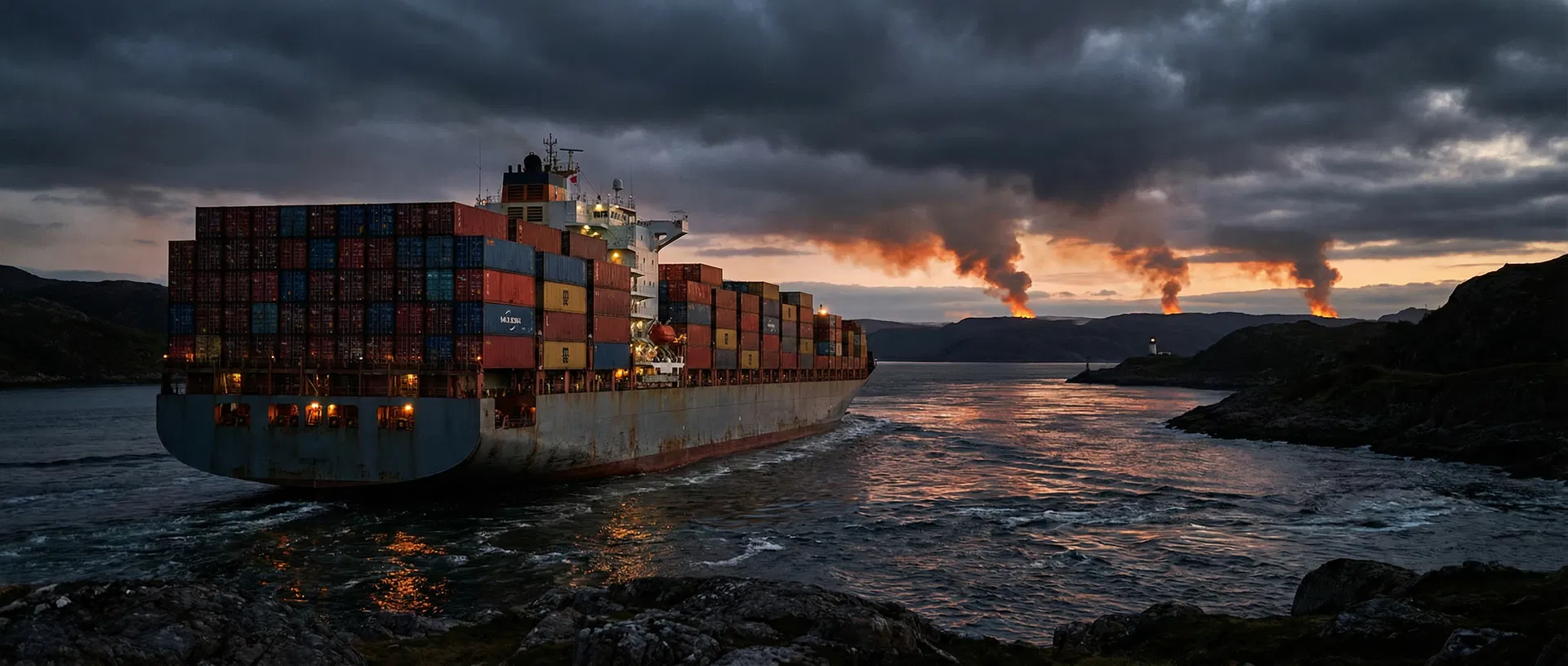
And then came the move that changed everything for global trade: on March 2, Iran closed the Strait of Hormuz — the narrow waterway through which roughly 20% of the world's petroleum and a significant share of global containerized cargo flows every single day.1 2
For homeowners in Johor planning a kitchen renovation, that single decision — made by officials 4,000 kilometres away — set off a chain reaction that is now reaching your doorstep.
Why a War in Iran Affects the Price of Your Kitchen Cabinet in Johor Bahru
It sounds absurd at first. What does a military conflict in the Persian Gulf have to do with the cost of a solid plywood kitchen cabinet in Taman Gaya or a quartz countertop in Bandar Dato Onn?
The answer lies in three interconnected pressure points: shipping routes, energy prices, and raw material costs. Each one feeds into the next, and together they form a chain that connects a warzone in the Middle East directly to the renovation industry in Malaysia.
Pressure Point 1
The Dual-Chokepoint Shipping Crisis
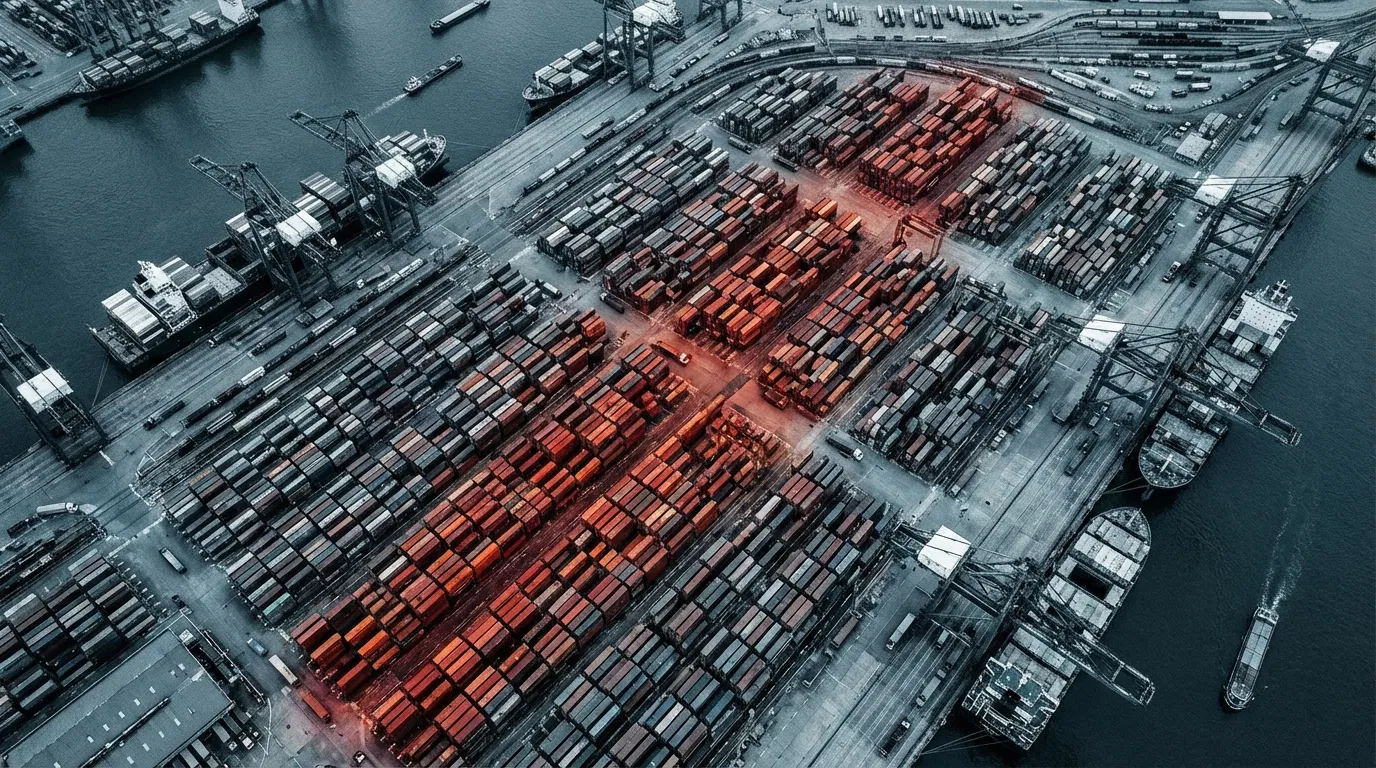
For the first time in modern history, two of the world's most critical maritime chokepoints are simultaneously compromised — the Strait of Hormuz and the Suez Canal/Bab el-Mandeb corridor. The Houthis, emboldened by the broader conflict, have resumed attacks on commercial vessels transiting the Red Sea. Together, these two passages handle roughly one-third of all global seaborne crude oil trade and a massive share of containerized cargo.1
The response from the shipping industry has been swift and severe. All five of the world's largest container shipping lines — Maersk, MSC, CMA CGM, Hapag-Lloyd, and COSCO — have suspended or halted transits through the Strait of Hormuz.1 Vessels are now being rerouted around the Cape of Good Hope at the southern tip of Africa, adding 10 to 15 additional days to transit times and absorbing approximately 2.5 million TEUs of global container shipping capacity.3
| Shipping Line | Action Taken | Surcharge |
|---|---|---|
| CMA CGM | Suspended Suez Canal passage; rerouting via Cape of Good Hope | $2,000/TEU — $3,000/FEU |
| MSC | Suspended all bookings for worldwide cargo to the Middle East | — |
| Hapag-Lloyd | War risk surcharge on Upper Gulf, Persian & Arabian Gulf cargo | $1,500/TEU — $3,500/container |
| Maersk | Paused sailings through Bab el-Mandeb; rerouting via Cape of Good Hope | — |
These are not theoretical numbers. They are surcharges that have already taken effect as of early March 2026. Every container of imported plywood, aluminium sheeting, quartz slab, sintered stone panel, hardware fitting, and kitchen appliance that travels through these routes now costs $1,500 to $4,000 more per container than it did just two weeks ago.1 4
For a country like Malaysia, where sea freight accounts for 50.6% of all imports, these surcharges ripple through the entire supply chain.5
Pressure Point 2
The Energy Price Shock
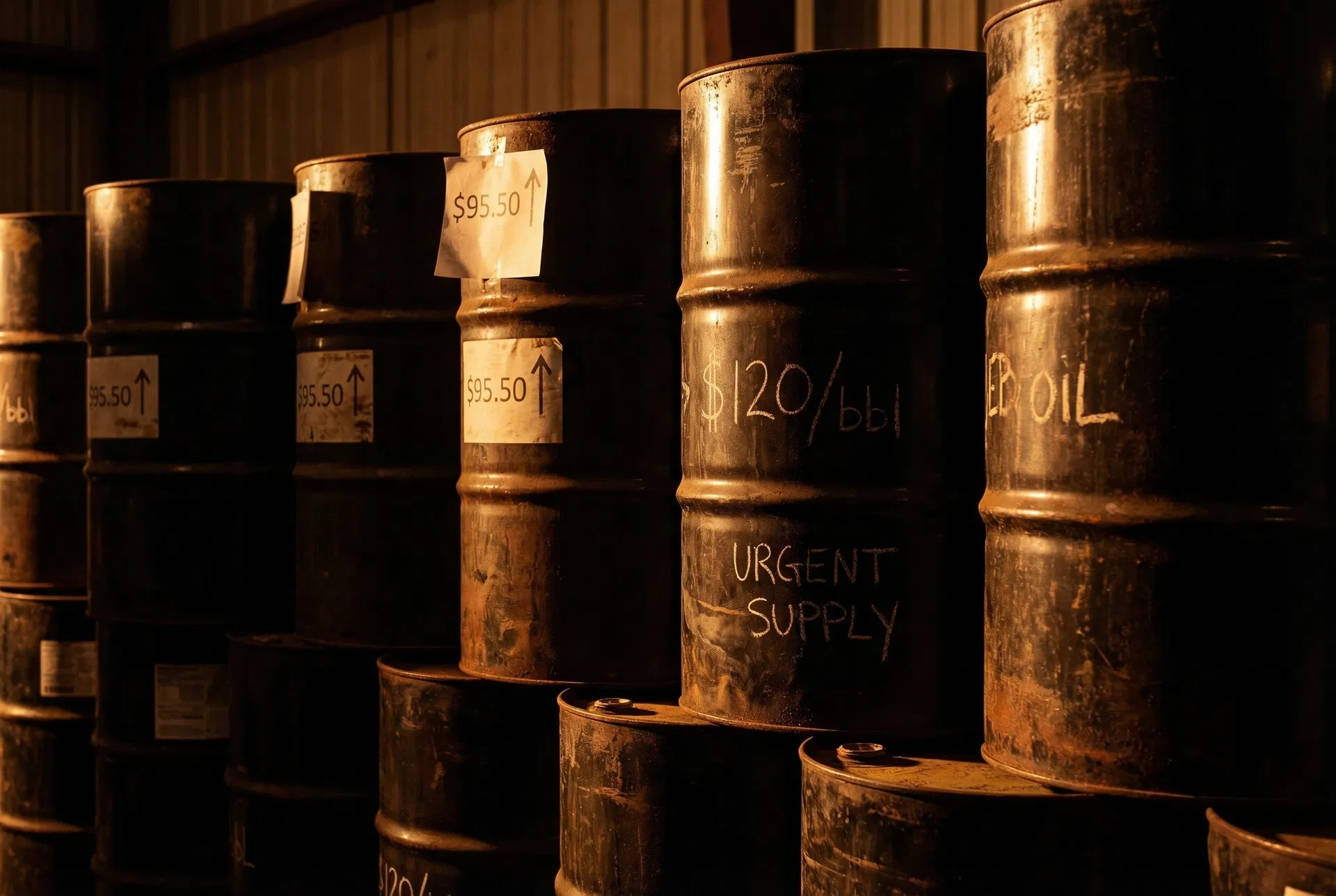
The closure of the Strait of Hormuz has effectively frozen roughly 20 million barrels per day of crude oil out of global markets.1 Brent crude surged as much as 13% following the strikes, settling at approximately US$83 per barrel as of early March — already well above the Malaysian government's budget assumption of US$60 to US$65 per barrel.5 6
| Institution | Oil Price Forecast (if conflict persists) |
|---|---|
| Goldman Sachs | US$120–$150 per barrel |
| JPMorgan | US$120 per barrel (if war lasts beyond 3 weeks) |
| Deutsche Bank | Up to US$200 per barrel (worst-case) |
| Barclays | US$100 per barrel (increasingly plausible) |
Why does this matter for kitchen cabinets? Because energy is embedded in every stage of the renovation supply chain. Steel foundries and aluminium smelters are among the most energy-intensive manufacturing operations in the world. When oil and LNG prices spike, the cost of producing reinforcing steel, aluminium frames, and even cement rises in tandem. Industry analysts project that metal products — including steel, aluminium, and copper — could jump by 15 to 20% by Q3 2026.4
Aluminium prices, already averaging above US$3,000 per tonne on the London Metal Exchange, are now forecast to hit US$4,000 per tonne as deliveries from major Middle Eastern producers face severe disruption.7 8
Pressure Point 3
The Malaysia-Specific Impact
Malaysia is not immune to these global forces. Economists at Sunway University have warned that a prolonged conflict accompanied by oil prices exceeding US$100 per barrel "would trigger downward growth forecast revisions for the world economy as well as Malaysia."5
CIMB Securities, one of Malaysia's leading research houses, has already flagged that Malaysian contractors and building materials companies face margin pressure from rising costs. Building materials manufacturers are particularly vulnerable to input cost volatility in coal, scrap metal, and fuel — all of which are climbing. The research house has downgraded the building materials sector from "overweight" to "neutral."9
The Straits Times reported that Malaysia's fuel subsidy scheme — which keeps RON95 petrol at RM1.99 per litre — is under strain. Every US$10 increase in oil prices per barrel generates an additional RM2.5 to RM3 billion in petroleum revenue, but simultaneously inflates the subsidy bill. If oil remains at US$90 per barrel for six months or more, it may become "difficult to maintain the current RON95 price."6
"When crude rises, fuel costs for shipping, aviation, trucking and manufacturing increase, pushing up the cost of imported goods, raw materials and food inputs. These higher costs are often passed along the supply chain."
The impact on renovation materials will not arrive overnight. Contracts and existing inventories provide a buffer of weeks, sometimes months. But the trajectory is clear: prices are going up, and the window to lock in current rates is narrowing.
What This Means for Your Kitchen Renovation in Johor — In Real Terms

Imported countertop materials will be affected first. Quartz stone, sintered stone, granite, and marble — many of which are sourced from China, India, Turkey, and the Middle East — travel by sea. The additional $2,000 to $4,000 per container in shipping surcharges will be distributed across the slabs in that container. For a typical kitchen countertop order, this could translate to a price increase of several hundred ringgit per project.
Aluminium cabinet prices will follow. With aluminium forecasts surging toward US$4,000 per tonne and Middle Eastern smelter output disrupted, the cost of aluminium kitchen cabinets and aluminium-framed wardrobes will rise. Homeowners who have been quoted for aluminium cabinetry should be aware that those quotes may not hold indefinitely.
Plywood and wood-based products face indirect pressure. While solid plywood is not directly sourced from the Middle East, the cost of transporting it — and the cost of the adhesives, coatings, and hardware that accompany it — is tied to energy and shipping costs.
Kitchen appliances and hardware fittings are at risk. FedEx has suspended flights to and from multiple Middle Eastern countries. Emirates SkyCargo and Qatar Airways Cargo have halted operations due to airspace closures.3 This disrupts the global logistics networks that move kitchen hoods, ovens, hinges, and drawer systems from factories in Europe and Asia to showrooms in Johor.
Completion timelines may stretch. With shipping delays of 10 to 15 additional days per voyage, and with some carriers suspending bookings entirely, material deliveries that were once predictable are now uncertain.
The Smart Homeowner's Response: Why Acting Now Matters
In times of global uncertainty, the worst strategy is to wait and hope. Supply chain disruptions propagate on a lag of two to four weeks, according to Thomson Reuters — meaning the full impact of today's shipping suspensions and surcharges has not yet arrived.1
Homeowners in Johor who are planning a kitchen renovation, wardrobe installation, or whole-house cabinetry project have a window of opportunity right now — before the next wave of price adjustments takes effect.
Not every cabinet company in Johor is equipped to navigate a global supply chain crisis.
The ones that will protect your budget and timeline are those with deep material inventories, diversified supplier networks, transparent pricing, and the financial flexibility to absorb short-term shocks rather than passing them immediately to customers.